%20--%3e%3csvg%20version='1.1'%20id='Ebene_1'%20xmlns='http://www.w3.org/2000/svg'%20xmlns:xlink='http://www.w3.org/1999/xlink'%20x='0px'%20y='0px'%20viewBox='0%200%20897.61%20762.46'%20style='enable-background:new%200%200%20897.61%20762.46;'%20xml:space='preserve'%3e%3cstyle%20type='text/css'%3e%20.st0{fill:%2305171D;}%20%3c/style%3e%3cg%3e%3cpath%20class='st0'%20d='M211.66,376.86h-2.38c-7.13,27.08-34.67,47.52-66.99,47.52c-63.19,0-95.97-46.1-95.97-130.67%20c0-84.58,32.78-130.19,95.97-130.19c32.32,0,59.86,19.96,66.99,47.51h2.38V67.07h70.32v351.61h-70.32V376.86z%20M211.66,330.78%20v-73.64c0-22.81-19.48-36.59-46.09-36.59s-46.09,20.43-46.09,51.8v43.24c0,31.36,19.48,51.79,46.09,51.79%20S211.66,353.58,211.66,330.78'/%3e%3cpath%20class='st0'%20d='M352.28,223.87h-35.16v-54.64h35.16v-29.46c0-48,26.13-72.7,74.6-72.7h45.61v54.65h-49.9v47.51h49.9v54.64%20h-49.9v194.81h-70.32V223.87z'/%3e%3cpolygon%20class='st0'%20points='503.46,67.07%20573.78,67.07%20573.78,274.71%20576.63,274.71%20607.53,228.62%20657.41,169.23%20735.33,169.23%20652.19,264.73%20744.83,418.67%20661.21,418.67%20605.14,313.2%20573.78,348.36%20573.78,418.67%20503.46,418.67%20'/%3e%3crect%20x='773.37'%20y='169.22'%20class='st0'%20width='70.32'%20height='249.45'/%3e%3cpath%20class='st0'%20d='M808.53,52.95c20.96,0,38.01,17.05,38.01,38.01c0,20.96-17.05,38.01-38.01,38.01%20c-20.95,0-38.01-17.05-38.01-38.01C770.52,70,787.58,52.95,808.53,52.95%20M808.53,48.2c-23.61,0-42.76,19.15-42.76,42.76%20c0,23.61,19.15,42.76,42.76,42.76c23.61,0,42.76-19.15,42.76-42.76C851.29,67.35,832.14,48.2,808.53,48.2'/%3e%3cpath%20class='st0'%20d='M838.94,703.81h-60.82V463.87h60.82V703.81z%20M843.69,459.11h-70.32v249.45h70.32V459.11z'/%3e%3cg%3e%3cpath%20class='st0'%20d='M712.05,653.92V544.64c0-58.92-36.11-91.22-106.44-91.22c-52.26,0-80.77,18.05-100.72,47.51l41.81,37.06%20c10.93-15.2,25.66-29.46,53.69-29.46c29.46,0,41.33,15.2,41.33,39.43v15.68h-39.42c-66.06,0-106.91,25.19-106.91,77.93%20c0,43.24,27.56,72.69,77.44,72.69c35.05,0,63.89-13.96,74.36-39.92h2.38c6.68,21,22.97,34.22,44.93,34.22h40.83v-54.64H712.05z%20M730.58,703.81H694.5c-20.72,0-36.15-13.03-41.53-34.22h-1.73h-1.27h-0.82h-3.21h-1.77c-8.71,25.38-36.29,39.92-71.34,39.92%20c-45.52,0-72.69-25.39-72.69-67.94c0-60.48,55.55-73.18,102.16-73.18h39.42h4.75v-4.75v-15.68c0-28.91-15.94-44.19-46.09-44.19%20c-28.04,0-43.84,13.77-54.39,27.23l-34.78-30.83c21.11-29.03,50.43-42.02,94.4-42.02c66.53,0,101.69,29.9,101.69,86.47v109.29%20v4.75h4.75h18.53V703.81z'/%3e%3cpath%20class='st0'%20d='M646.47,603.56v-4.75h-4.75h-34.21c-40.1,0-46.09,20.54-46.09,32.78v7.13c0,11.71,4.87,31.36,37.53,31.36%20c29.3,0,47.51-14.21,47.51-37.06V603.56z%20M641.72,633.02c0,22.81-19.48,32.31-42.76,32.31c-20.9,0-32.78-8.55-32.78-26.61v-7.13%20c0-18.05,14.25-28.03,41.34-28.03h34.21V633.02z'/%3e%3c/g%3e%3c/g%3e%3c/svg%3e)
Expertise · Medical Image Registration
Deep Learning-based Medical Image Registration
Align medical image sequences across time, patients and imaging modalities with AI-powered registration technology for longitudinal analysis, therapy monitoring and next-generation diagnostic systems.
Why It Matters
Why Medical Image Registration Matters
Medical images acquired over time rarely align perfectly. Patient movement, respiratory motion, anatomical changes and different imaging devices introduce variability that limits reliable comparison. Noise and differences in spatial resolution can obscure correspondence between scans, while anatomical deformation makes simple rigid alignment insufficient for many research questions.
DFKI develops deep learning-based medical image registration technologies that accurately align MRI, CT, PET and other medical images, enabling clinicians and AI systems to detect meaningful temporal and structural changes with greater confidence. For an industrial R&D project, the choice of registration method and evaluation criteria needs to reflect the anatomy, acquisition protocols and intended downstream application.
Selected DFKI research directions
From raw image sequences to aligned, AI-ready data.
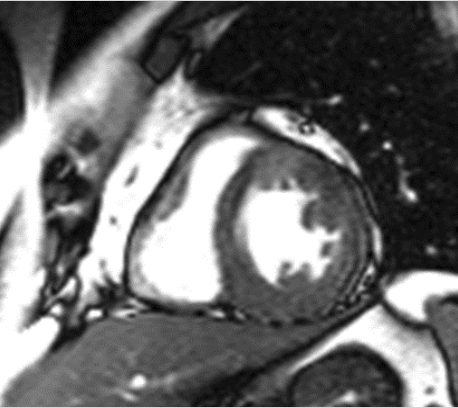
Longitudinal Patient Monitoring
Register MRI or CT scans acquired months or years apart to accurately assess disease progression and therapy response.
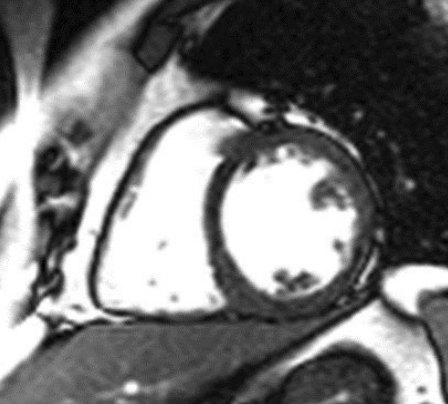
Multi-modal Image Registration
Align CT, MRI, PET and other imaging modalities into a common spatial representation for improved diagnosis and AI-assisted analysis.
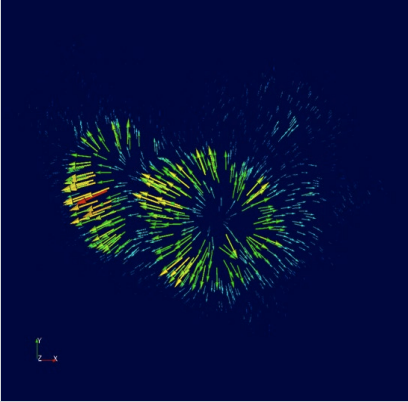
Motion Correction & Temporal Analysis
Correct respiratory and cardiac motion while enabling quantitative analysis of dynamic anatomical changes.
Challenges We Solve
Where medical image registration is genuinely hard.
Robust AI medical image registration has to hold up under scanner drift, patient motion and years of follow-up imaging. In longitudinal disease studies, alignment must account for acquisition differences without obscuring morphological changes during treatment.
High variability between scans, patients, scanners and imaging protocols
Motion artefacts caused by respiration and cardiac cycles
Robust longitudinal alignment across follow-up examinations
Morphological changes during therapy monitoring
Multi-modal image fusion challenges
Noise, resolution differences and anatomical deformation that complicate alignment
Our Expertise
Deep learning registration, tuned to clinical reality.
DFKI combines longitudinal, temporal and multi-modal registration methods with quantitative change analysis to support radiology, cardiology and oncology partners.
Longitudinal Image Registration
Robust alignment across multiple patient examinations to support disease progression analysis and long-term monitoring.
Temporal Image Alignment
Deep learning-based medical image sequence registration for studying cardiac contraction, respiratory movement and functional imaging across successive frames.
Quantitative Change Analysis
Study changes including tumor growth, tissue remodeling, organ deformation and therapy response. Reliable interpretation requires separating alignment errors from actual anatomical change.
Multi-modal Registration
Combine MRI, CT, PET and additional imaging modalities into unified datasets for AI-assisted diagnostics and clinical decision support.
Business Impact
Medical image registration for industrial R&D.
For medical imaging technology developers, diagnostic software teams and clinical research partners, registration provides a foundation for comparing images across time points and modalities. Its value depends on how well alignment serves the intended research or development task.
Accelerate AI-powered diagnostic development
Improve longitudinal disease monitoring
Support clinical trials and therapy development
Enable reliable multi-modal AI solutions
Reduce manual image alignment effort
Build robust temporal AI models beyond static image snapshots
In medical imaging technology and AI-assisted diagnostic systems, registration can support image fusion, consistent inputs for downstream analysis and investigation of motion correction in respiratory and cardiac imaging. Evaluation should cover the relevant scanners, protocols and patient variation, rather than relying only on visually plausible alignment.
In clinical research and therapy monitoring, longitudinal medical imaging helps compare tumor growth, cardiac contraction and organ deformation. For advanced medical device development, DFKI can explore registration as one part of a broader AI R&D project, with application-specific validation rather than assumptions of clinical readiness. See how registration fits into the wider path of medical imaging AI development.
Typical Applications
Where DFKI registration research is applied.
Longitudinal imaging, therapy monitoring AI and multi-modal image registration span most clinical and industrial imaging domains.
Why DFKI
A trusted European partner for healthcare AI innovation.
DFKI is one of the world's largest AI research centers, with vendor-independent expertise across medical imaging AI, longitudinal imaging and therapy monitoring AI.
1,500+
AI researchers
35+
Years of AI research
Publicly funded
Independent research
European
Research excellence
Related Expertise & Services
Where medical image registration connects.
Registration rarely stands alone — connect it with segmentation, multimodal analysis and research collaboration to evaluate a complete imaging AI approach.
Medical AI R&D Partner
Research-to-prototype collaboration across imaging, sensing and movement analysis.
Learn moreMedical Image Analysis
Segmentation, classification and multimodal medical image analysis for diagnostics and research.
Learn moreMedical AI Solutions
Applied medical AI across imaging, diagnostics and clinical workflows — including segmentation and radiology.
Learn moreHealthcare AI Consulting
Strategic guidance for hospitals, MedTech and pharma teams building imaging AI and diagnostic systems.
Learn moreRegistration is often one building block in a larger system — see how it fits into AI-enabled medical devices.
Build More Reliable Medical Imaging AI
Whether you're developing imaging software, AI diagnostics, clinical decision support systems or next-generation medical devices, DFKI helps transform complex medical image sequences into robust, AI-ready datasets and clinically valuable insights.